
Alejandro Vigna-Gomez receives a Reintegration Fellowship awarded by the Carlsberg Foundation
Alejandro returns to Denmark with the support of a Reintegration Fellowship from the Carlsberg Foundation. His project, “The Chronology of Massive, Multiple-Star Systems,” uses state-of-the-art numerical simulations to explore how populations of massive stars lead to the formation of black hole binaries.
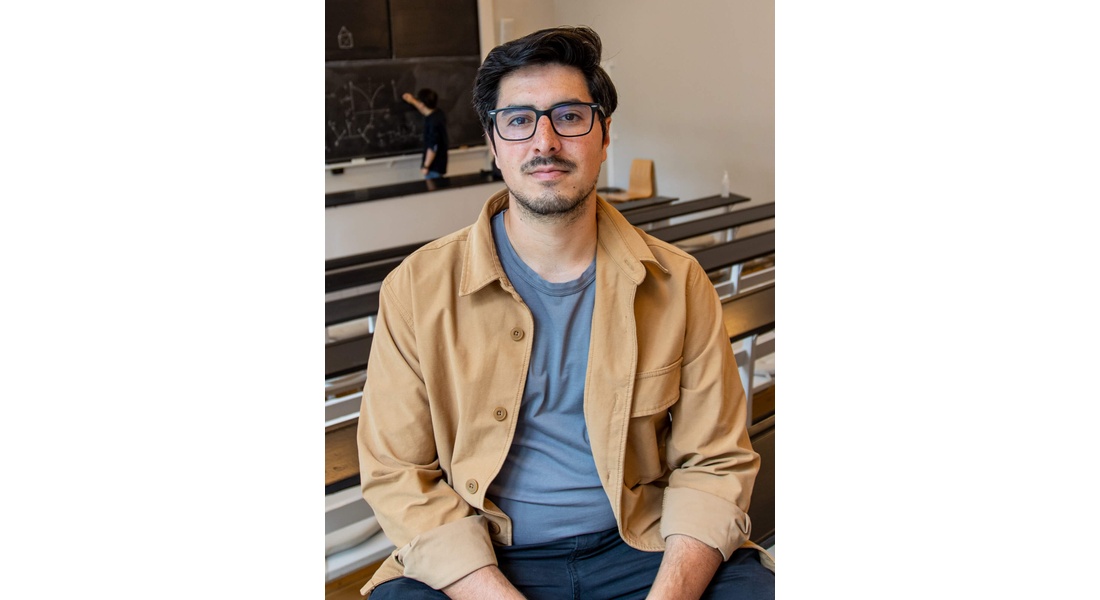
Alejandro Vigna-Gomez received his Doctor of Philosophy degree in 2019 from the Institute for Gravitational Wave Astronomy at the University of Birmingham in England. He then joined the Niels Bohr Institute to pursue independent research—initially as a fellow at DARK and later as a member of the Niels Bohr International Academy. After his time in Denmark, he moved to Germany and became a Fellow at the Max Planck Institute for Astrophysics, where he spent three years in the stellar department collaborating with leading experts in computational astrophysics, particularly in the fields of stellar evolution and supernova physics.
Alejandro returns to Denmark with the support of a Reintegration Fellowship from the Carlsberg Foundation. His project, “The Chronology of Massive, Multiple-Star Systems,” uses state-of-the-art numerical simulations to explore how populations of massive stars lead to the formation of black hole binaries. This project will make use on hundreds of gravitational-wave detections of black hole mergers at cosmological distances and will coincide with ongoing observational campaigns that are expected to reveal black hole binaries in the Milky Way and its satellite galaxies. Back in Denmark, Alejandro plans to establish his own research group to investigate how stellar evolution, binary interactions, and gravitational dynamics collectively drive the formation of astrophysical black holes.